logo

Humidity Control in Car Spray Booths: Optimizing Systems for Coastal GCC Climates

March 25, 2026

Latest company news about Humidity Control in Car Spray Booths: Optimizing Systems for Coastal GCC Climates
Humidity Control in Car Spray Booths: Optimizing Systems for Coastal GCC Climates

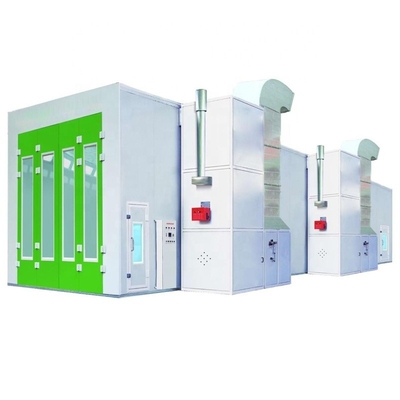
In coastal regions of Saudi Arabia and the UAE, such as Dammam or Dubai, humidity levels frequently exceed 80%-90%. For B2B automotive workshops transitioning to waterborne paints, this presents a significant technical hurdle. Unlike solvent-based coatings, waterborne paints rely on the evaporation of water; high ambient humidity saturates the air, preventing the paint from drying, leading to "runs," "sags," and compromised adhesion. A specialized Car Spray Booth equipped with integrated dehumidification and climate control is the only way to ensure industrial-grade reliability.


1. Functional Logic: Breaking the Saturation Barrier

The core challenge in coastal GCC climates is the "Vapor Pressure Deficit." When the air is nearly saturated with moisture, it cannot absorb the water evaporating from the paint film.

  • Refrigerated Dehumidification: The booth’s intake air is passed over cooling coils to drop the temperature below the dew point, stripping moisture from the air before it enters the plenum.

  • Desiccant Wheel Integration: In extreme humidity, a silica-gel desiccant wheel adsorbs moisture at a molecular level, providing ultra-dry air (below 40% RH) that accelerates the flash-off process of waterborne basecoats.

  • Thermal Stabilization: Consistent temperature (ideally 22°C–25°C) is maintained to ensure the chemical reaction of the hardeners remains predictable, preventing "solvent trap" defects during the bake cycle.


2. Technical Parameter Comparison: Coastal vs. Standard Booths

Standard spray booths often lack the latent heat capacity required to process the high moisture content of Persian Gulf air.

Parameter Standard Spray Booth Coastal GCC-Spec Booth
Relative Humidity (RH) Target Ambient (Uncontrolled) Constant 40% - 50% RH
Cooling Method Air-to-Air Exchange Industrial Chiller + Reheat Coil
Dehumidification Tech None Refrigerated + Desiccant Hybrid
Flash-off Support Standard Airflow Corner Blowers (Ionized Air)
Insulation Type 50mm EPS 80mm High-Density Rockwool

3. Application Scenarios in the Middle East
  • Premium Brand Repair Centers: For luxury vehicles using complex waterborne OEM finishes, any fluctuation in humidity can alter the metallic flake orientation. A climate-controlled booth ensures color matching accuracy (E-E-A-T) regardless of external weather.

  • Marine & Coastal Infrastructure: For components exposed to high salinity and moisture, the booth provides a "controlled cure" environment, ensuring the cross-linking of the epoxy primers is perfect, which is vital for long-term corrosion resistance.


4. Strategic Engineering: The "Reheat" Process

A critical SOP for high-humidity areas is the Reheat Cycle. After the air is chilled to remove moisture, it becomes too cold for optimal spraying. The system must "reheat" this dry air back to 24°C. This creates "thirsty air" with a high capacity to absorb water from the paint, reducing flash-off times by up to 60% compared to non-controlled booths.


5. Conclusion

In the coastal regions of the Saudi and UAE markets, a Car Spray Booth is a precision instrument, not just an enclosure. By configuring the booth with robust dehumidification and thermal stabilization systems, operators can neutralize the negative effects of high humidity. This investment not only ensures compliance with modern waterborne paint specifications but also guarantees the structural integrity and aesthetic quality of the finish in one of the world's most demanding climates.

Get in touch with us
Contact Person : Miss. Xiang Wen
Tel : +8618774648113
Fax : 86-10-2032781931-31
Characters Remaining(20/3000)