logo

Preventing Paint Blistering & Peeling: Enhancing Adhesion and Weather Resistance in Car Spray Booths

March 25, 2026

Latest company news about Preventing Paint Blistering & Peeling: Enhancing Adhesion and Weather Resistance in Car Spray Booths
Preventing Paint Blistering & Peeling: Enhancing Adhesion and Weather Resistance in Car Spray Booths

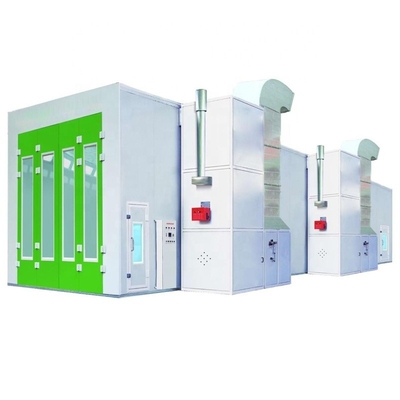
In regions with extreme UV indices and drastic temperature swings, such as the Middle East and Africa, paint finishes face constant thermal stress. Without superior adhesion, intense solar radiation causes the paint film to lose its bond, leading to massive blistering or peeling. For B2B automotive operations, a technically advanced Car Spray Booth is the primary tool for engineering a robust molecular bond that can withstand these harsh conditions.


1. Functional Logic: Strengthening the Molecular Bond

The integrity of a coating depends on the quality of the chemical cross-linking between the substrate and the paint layers.

  • Controlled Thermodynamic Curing: In 50°C ambient heat, natural drying causes the surface to "flash" too quickly, trapping solvents underneath (Solvent Trapping). A spray booth utilizes a staged heating profile to ensure solvents evaporate from the bottom up, eliminating the root cause of post-cure blistering.

  • UV-Shielded Micro-climate: By providing a controlled environment free from solar radiation during the application phase, the booth prevents the photo-degradation of primers before the topcoat is applied, maximizing inter-coat adhesion and preventing future delamination.


2. Technical Parameter Comparison: Adhesion-Optimized vs. Standard Systems
Parameter Standard Spray Booth Adhesion-Optimized System
Curing Method Convection (Hot Air) Short-wave Infrared (IR) Radiation
Heating Direction Outside-In (Surface-first) Inside-Out (Substrate-up curing)
Temp. Stability ±5°C ±1.5°C (PLC Linear Ramp Control)
Surface Prep Support Ambient air drying Integrated Thermal Degreasing Cycle
Air Filtration Standard EU5 / F5 High-Efficiency Particulate Air (HEPA)

3. Key Application Scenarios
  • High-Gloss Refinishing for Luxury Fleets: For premium vehicles, the use of Infrared Baking ensures the coating reaches its full chemical hardness. This creates a dense molecular structure that is far more resistant to the thermal expansion cycles common in desert climates.

  • Coastal Industrial Assets: For machinery exposed to both high UV and salt spray, the booth maintains a constant 25°C substrate temperature during application. This ensures the primer "wets" the surface perfectly, providing the maximum mechanical grip required for long-term corrosion resistance.


4. Strategic Implementation: The Power of IR Curing

In high-UV zones, traditional hot-air curing is often insufficient for industrial reliability. Short-wave IR technology is superior because:

  1. Vapor Pressure Management: Energy penetrates the paint layers, curing it from the substrate up. This ensures all volatiles escape before the surface "skins over," effectively preventing gas-filled blisters.

  2. UV Degradation Resistance: A fully cross-linked, hardened finish is less susceptible to the high-energy UV photons that would otherwise break down the chemical bonds of an under-cured or "soft" finish.


5. Conclusion

Preventing blistering and peeling is a matter of precision thermal management and environmental isolation. A Car Spray Booth configured with linear temperature ramping and IR curing capabilities acts as a technical safeguard. By ensuring a deep, uniform cure and protecting the paint from UV exposure during its most vulnerable state, workshops can deliver finishes that possess the industrial-grade durability (E-E-A-T) required for the world's most demanding environments.

Get in touch with us
Contact Person : Miss. Xiang Wen
Tel : +8618774648113
Fax : 86-10-2032781931-31
Characters Remaining(20/3000)