logo

Transitioning to Water-based Paints: Retrofitting Legacy Car Spray Booths for Eco-Friendly Drying

March 25, 2026

Latest company news about Transitioning to Water-based Paints: Retrofitting Legacy Car Spray Booths for Eco-Friendly Drying
Transitioning to Water-based Paints: Retrofitting Legacy Car Spray Booths for Eco-Friendly Drying

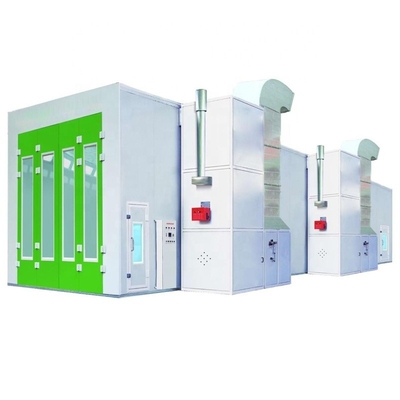
As environmental regulations tighten globally, the automotive refinishing sector is rapidly pivoting toward waterborne coatings. However, the physical properties of water-based paints—specifically their reliance on slow moisture evaporation—render legacy Car Spray Booths inefficient. Without retrofitting, drying times can triple, leading to "sags," "blushes," and a massive drop in workshop throughput. This guide explores the essential technical upgrades required to adapt existing infrastructure for high-performance waterborne drying.


1. Functional Logic: Breaking the "Saturation Barrier"

The primary challenge of waterborne paint is removing the saturated vapor layer sitting directly above the wet paint film.

  • Air-speed Flash-off Augmentation: Traditional downdraft airflow often leaves stagnant pockets around vehicle contours. Retrofitting integrated Corner Blower Systems creates high-velocity turbulence that disrupts the boundary layer, accelerating flash-off times by over 50%.

  • Thermal Precision Upgrades: Waterborne paints require extreme thermal stability. Replacing old direct-fire oil burners with Modulating Gas Burners or Short-wave Infrared (IR) Lamps allows for a precision-controlled temperature curve, ensuring uniform molecular cross-linking.


2. Parameter Comparison: Legacy Booths vs. Water-based Retrofits
Technical Metric Legacy Spray Booth Water-based Retrofit
Flash-off Time 15 - 20 Minutes 5 - 8 Minutes (with Assist Blowers)
Laminar Airflow Fixed 0.20 m/s Variable (Up to 0.35 m/s via VFD)
Humidity Management None (Ambient dependent) Integrated Dehumidification Control
Energy Consumption High (Heat loss) Heat Recovery + Inverter Drive (30% Saving)
Control Logic Analog / Manual Digital PLC (Pre-set Waterborne Profiles)

3. Key Application Scenarios
  • High-Throughput Fast Track Bays: For B2B shops focused on cycle time, adding Side-wall Auxiliary Fans is the priority. This allows for rapid multi-coat application without major structural modifications.

  • Coastal GCC Environments: In high-humidity regions like Dubai or Dammam, the retrofit must include a Refrigerated Dehumidification Module. Controlling Relative Humidity (RH) below 50% is the only way to ensure waterborne paints cure correctly in extreme climates.


4. Technical Core: VFD and Intelligent Airflow

A waterborne-ready booth requires a multi-stage airflow logic:

  1. Spraying Mode: Standard laminar flow for overspray containment.

  2. Flash-off Mode: Variable Frequency Drives (VFD) ramp up the fans to high-velocity, engaging auxiliary nozzles to "strip" moisture from the surface.

  3. Bake Mode: Low-speed internal recirculation to maximize heat retention and energy efficiency.


5. Conclusion

Retrofitting a legacy Car Spray Booth for waterborne compatibility is a strategic investment that extends asset life while ensuring regulatory compliance. By optimizing air velocity, upgrading thermal controls, and introducing auxiliary evaporation tools, workshops can seamlessly bridge the technical gap to eco-friendly painting. This transition not only boosts productivity but also reinforces the facility's professional authority (E-E-A-T) in an increasingly green market.

Get in touch with us
Contact Person : Miss. Xiang Wen
Tel : +8618774648113
Fax : 86-10-2032781931-31
Characters Remaining(20/3000)